ops0 / Infrastructure field notes
Product Deep-Dive
Technical explainers on ops0 capabilities including discovery-first IaC, compliance gates, drift, queryable state, Kubernetes operations, and multi-cloud control.
Latest in this series
CloudFormation vs Terraform: Key Differences and How to Choose
CloudFormation manages state for you but only covers AWS. Terraform covers many providers but leaves state to you. A practical comparison and how to choose.
More to explore
23 articlesWhat Is ClickOps? Why Console Changes Pile Up and How to Bring Them Under Code
ClickOps is changing cloud infrastructure through a web console instead of code. Why it happens, what it costs, how to find it, and how to fix it without slowing teams down.

Automated Compliance Evidence: From Collection to Audit Pack
Collect infrastructure compliance evidence, review exceptions, reproduce audit samples, and share signed packs. See how ops0 works and what it cannot prove.

AWS Honeypots: Deception as Code for Early Cloud Threat Detection
Learn how AWS honeypots detect suspicious cloud activity and how ops0 deploys IAM, S3, and secret decoys as code with incident-ready context.

What Are the Top Cloud Security Risks Your Business Should Know About?
Understand the most important cloud security risks, from excessive permissions and exposed resources to drift, secrets, vulnerabilities, and missing logs.

How Do I Know If My Cloud Environment Is Actually Secure?
Learn how to assess cloud security using live inventory, identity, exposure, drift, vulnerability, policy, detection, and remediation evidence.

Blast Radius: Knowing What a Change Breaks Before You Apply It
A one-line change to a shared resource can quietly take down things nobody expected. Blast radius shows you the full set of upstream and downstream dependencies a change touches, before you apply it.

An A-to-F Grade for Your Cloud Account: How Cloud Risk Grading Works
A cloud risk grade turns a long findings list into a single A-to-F letter your executives, auditors, and engineers can all read. Here is what the grade represents, why it is trustworthy, and how to move it up.

Keeping Secrets Out of Your Terraform, and Out of Your AI
Credentials hardcoded into HCL, committed to Git, or left in plaintext state are the most common way infrastructure secrets leak. Here is how ops0 keeps secret values out of your Terraform, out of your logs, and out of AI context.

Your Scanner Cries Wolf: Cutting Cloud Security False Positives
Most cloud security findings get ignored because scanners over-report. Here is how correlating findings across engines and applying context turns noise into a risk grade your team can act on.

Cloud Security Posture Management, Explained: From Scan to Reviewed Fix
Cloud security posture management finds risky cloud configuration before it becomes an incident. Here is how ops0 correlates three scan engines, grades your account, and connects every finding to a reviewed fix.

Terraform to OpenTofu Migration: A Practical Guide
A practical Terraform to OpenTofu migration plan covering compatibility, protected state backups, plan review, recovery, and gradual adoption.

What Is IaC Operations? The Day-2 Layer for Terraform and OpenTofu
IaC operations is the day-2 discipline of running infrastructure as code safely: discovery, validation, policy, plan and apply, drift, state, cost, and audit across Terraform and OpenTofu.

How ops0 Turns Intent Into Safe Cloud Infrastructure
How ops0 bridges the gap between what users ask for and what cloud providers actually build, with security, compliance, review, and drift controls in the loop.

How to Query Cloud Infrastructure State
A practical answer to what queryable infrastructure means, why SQL-style questions beat static inventories, and how ops0 turns IaC state into answers.

How to Migrate CloudFormation to Terraform with AI
What AI can safely automate when converting CloudFormation templates into Terraform or OpenTofu, and what teams should still review.

How Kubernetes Incidents Become AI-Guided Fixes
Kubernetes events are noisy. ops0 turns them into prioritized incidents with severity, resource context, notes, AI analysis, and remediation paths.

How Git Sync Works for Generated IaC and Discovery
Generated infrastructure code still needs review, branches, pull requests, and audit trails. Here is how ops0 keeps AI-generated IaC connected to Git workflows.

What is Infrastructure Drift and How to Fix It
Infrastructure drift is the gap between IaC and live cloud state. Learn how ops0 detects drift, maps impact, and routes safe remediation.

How to Generate Terraform from Existing AWS Resources
How ops0 Discovery helps teams generate Terraform from existing AWS resources, review the code, sync it to Git, and manage brownfield cloud.

Multi-Cloud Infrastructure Management That Works
How teams manage AWS, GCP, Azure, and OCI with unified discovery, policy, IaC workflows, dependency context, and operational visibility.

Compliance as Code: Which Approach Fits Your Team
Compare Checkov, OPA, Conftest, and Trivy for compliance as code, with a practical policy example and clear enforcement boundaries.

Infrastructure Discovery: Turning Unknown Cloud State into Reviewable Code
How ops0 Discovery scans cloud resources across providers, maps unmanaged infrastructure, and turns unknown cloud state into managed code.

Inside ops0: Discovery, IaC, Resource Graph, and Workflows
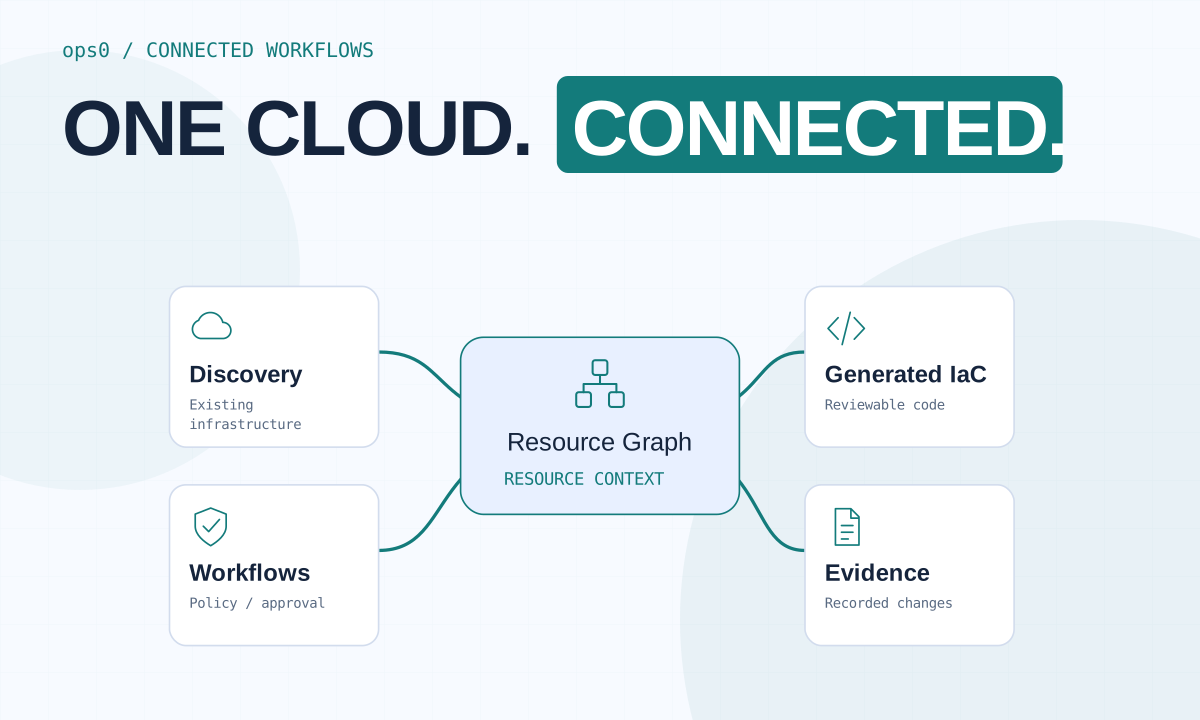
How ops0 connects Discovery, generated IaC, Resource Graph, Configurations, Workflows, policy gates, and audit evidence into one loop.