Kubernetes operations
Kubernetes Operations

One operating surface
for live clusters.

Run Kubernetes with incidents, costs, vulnerabilities, certificates, and IaC linkage in one view instead of scattering runtime truth across separate tools.

EKS, GKE, AKS, OKE, and self-managed clusters
Trivy, OpenCost, incidents, certificates, and orphans in one view
Kubernetes linked back to IaC projects and deploy context
No Grafana, Prometheus, or side dashboards required
ops0 cluster detail
LIVE CLUSTER
Cluster summary

checkout-prod-eks has one active incident, two critical CVEs, rising namespace cost, and a linked Terraform project ready for action.

Incidents
1 active
Vulns
2 critical
Cost
$4.1k/mo
IaC link
Connected
Operating signals
Recent incidentCrashLoopBackOff after last deploy
CertificateIngress cert expires in 12 days
Orphan scan3 unused services flagged for review
→ Take action in linked IaC projectRoot cause and remediation in one surface
Operations Center

Clusters, incidents, cost, and vulnerabilities in one surface.

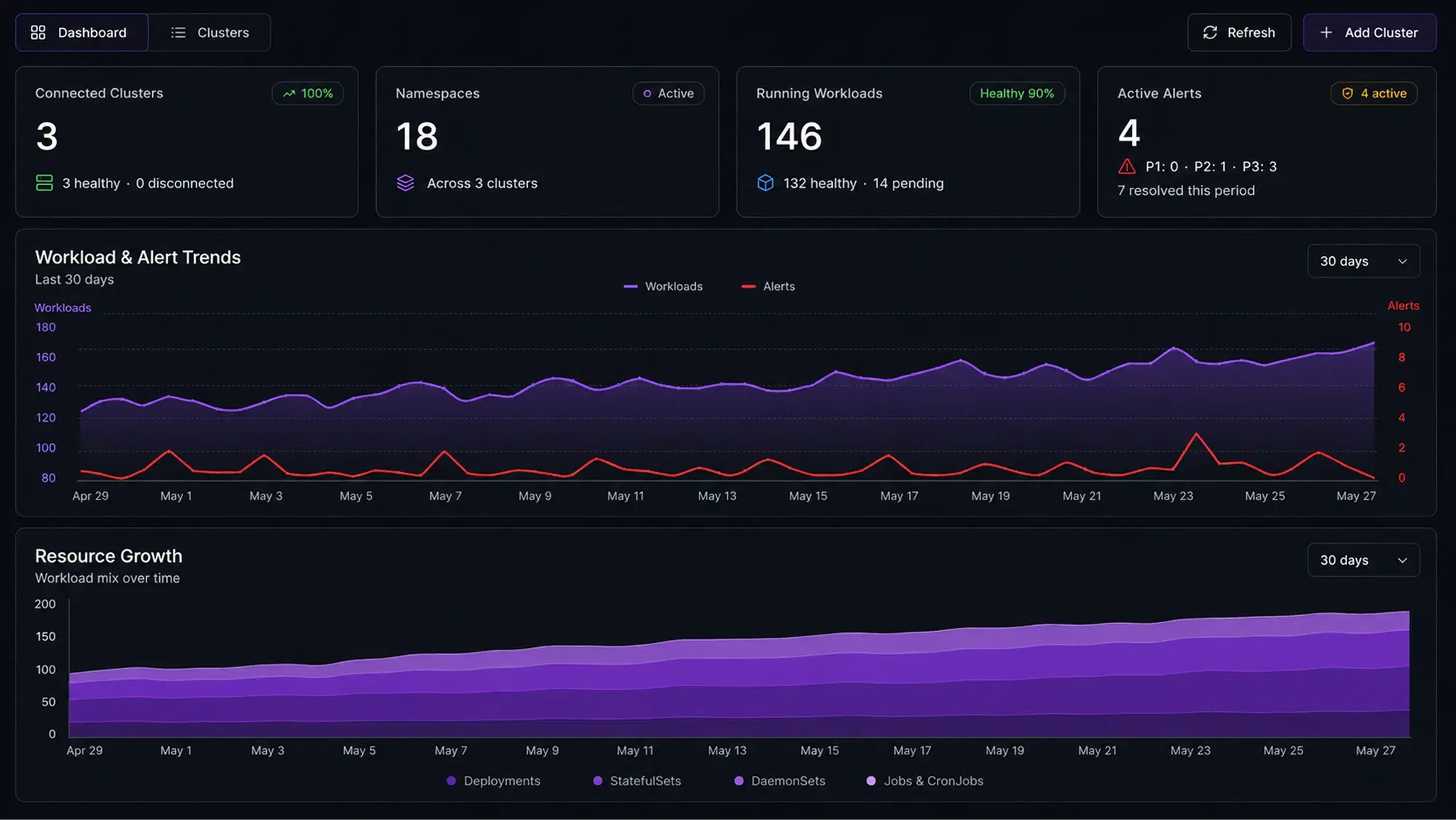
ops0 treats Kubernetes as an operating surface, not a dashboard handoff. Cluster management, resource detail, incidents, cost, vulnerabilities, certificates, and cleanup live together.

  • 31 resource types in cluster detail view
  • Works across EKS, GKE, AKS, OKE, and self-managed clusters
  • Designed for teams that do not want five tools open to understand one outage
Incidents

Runtime problems come with context, not just alerts.

Kubernetes incidents include rollout tracking, correlated timeline data, and AI analysis so teams can move from “something is wrong” to cause and remediation faster.

  • Auto-monitoring for failed deployments and runtime issues
  • AI analysis for root cause, impact, and suggested remediation
  • Similar incident matching helps teams reuse operational learning
Vulnerabilities

Container risk shows up where the cluster already lives.

Trivy Operator installs directly onto connected clusters and surfaces CVEs, severity, scanned images, and exportable reports without moving teams into a separate vulnerability product.

  • One-click Trivy install and reconciliation
  • Cluster-wide vulnerability inventory with filtering and export
  • Useful for security review without losing operational context
Cost

Waste is visible at namespace and workload level.

OpenCost integration shows Kubernetes spend by namespace, pod, controller, and service, and pushes cost optimization back toward the infrastructure code that caused it.

  • One-click OpenCost setup with Prometheus support when needed
  • Efficiency filtering highlights underused workloads
  • Cost recommendations connect back to IaC changes instead of stopping at reporting
Linkage

Running clusters can be traced back to the code that provisioned them.

ops0 links clusters to their IaC projects so operations, remediation, and optimization can move back upstream into governed code instead of staying trapped in runtime.

  • Auto-detection scans IaC projects for Kubernetes resource definitions
  • Take Action opens the linked IaC editor with a prepared prompt
  • Useful for turning runtime issues into controlled changes
Hygiene

Certificates and orphaned resources stop surprising the team.

TLS inventory and orphan-resource scans catch the quiet issues that usually surface late: expiring certs, abandoned PVCs, stray services, and wasted spend hiding in cluster sprawl.

  • X.509 certificate parsing across cluster secrets
  • Orphan detection across seven resource types with smart filtering
  • Useful for finding storage, networking, and security waste before it becomes an incident
Next Move

Live infrastructure
still needs a map.

After Kubernetes operations, the next surface is the resource graph: topology, tfstate parsing, upstream and downstream dependencies, and blast radius.

Run Kubernetes with full context attached.

From code to cloud in
minutes, not days.

All services are online
ops0 binary code decoration