Compliance automation inside the workflow.
Block bad changes before deploy, keep scanning live state after deploy, and hand auditors a signed audit pack that is already assembled.
ops0 automates compliance by gating changes against policy before deploy, scanning live infrastructure against the same rules after deploy, and assembling auditor-ready evidence across six frameworks, shared as a snapshot report or a signed audit pack.
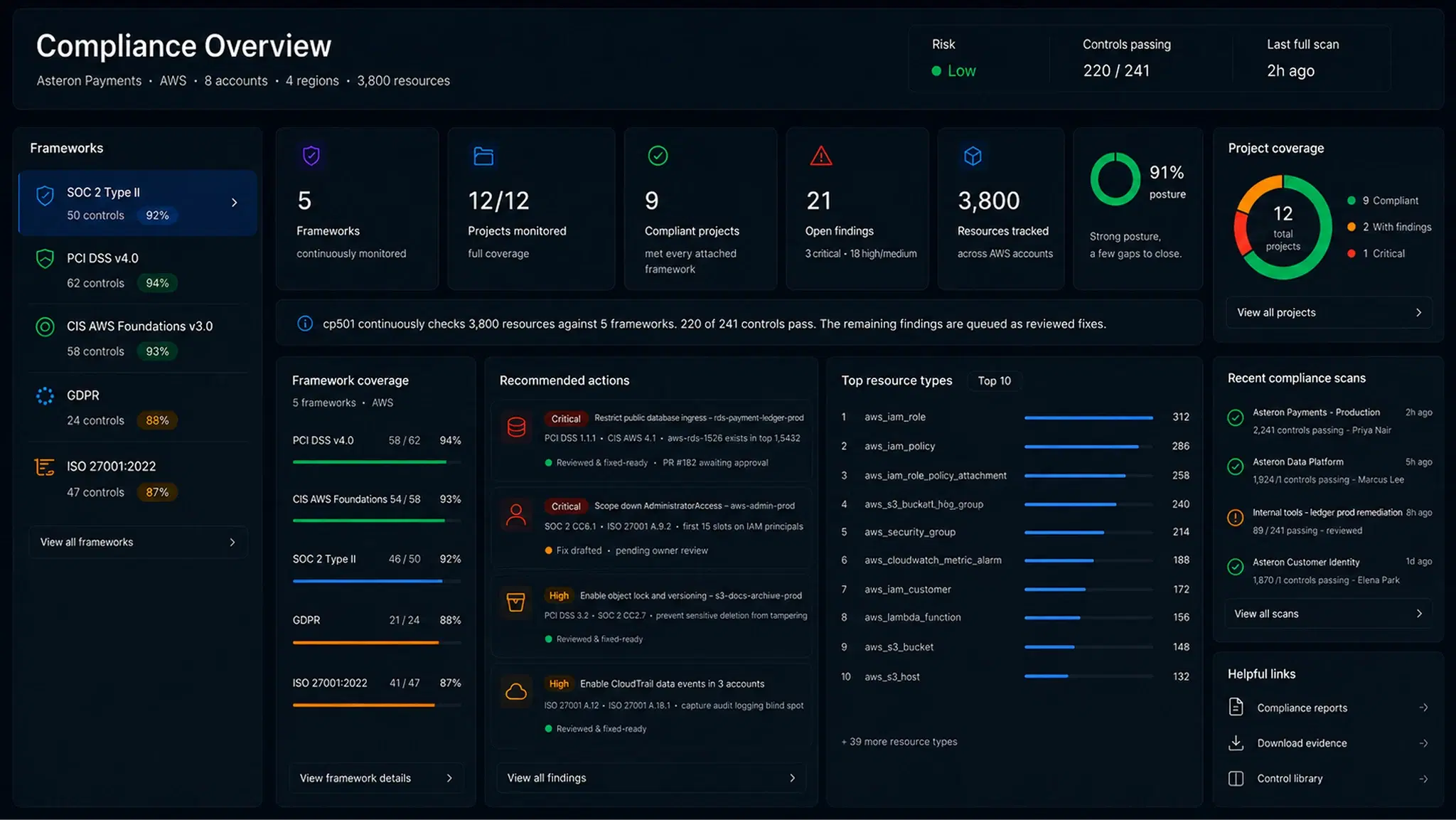
Compliance usually happens the week before the audit. Here it happens with every change.
Changes keep shipping.
Every infrastructure change flows through the same path, dozens a week.
Compliance built into everyday delivery.
Bad changes get stopped before they become findings.
One loop, running before and after every deploy.
- Gate before deployPolicy checks run on the plan before apply.
- Scan after deployThe same rules keep checking live state.
- Assemble evidenceDeployments, scans, and posture logged automatically for any audit period.
- Share snapshotPassword-protected link, no platform login needed.
Mapped and ready to run, no blank editor to start from.
In practice
Use policy gates, live scans, and evidence together.
Illustrative rule: application storage should remain private unless an approved use case requires public access. The resource owner proposes the configuration, the reviewer checks the exception, and the control owner retains the evidence.
| Stage | What to check | Owner and evidence |
|---|---|---|
| Before deployment | Inspect proposed access settings and public principals. Block unintended exposure or review a documented exception. | Resource owner and change reviewer: proposed code, plan, policy result, approval |
| After deployment | Inspect the live access configuration and compare it with the approved intent. A live scan can reveal drift or changes outside the pipeline. | Resource owner: resource identifier, observed settings, scan time, finding |
| Evidence review | Link the approved change to the resulting configuration and later checks. Track open findings and time-bounded exceptions. | Control owner: evidence references, reviewer, exception scope, verification result |
Use provider-specific checks: an AWS S3 access configuration and a GCP Cloud Storage access configuration have different settings and permission models. A passed technical check contributes evidence; it does not establish compliance with an entire framework.
Common questions
Make compliance
part of delivery.
Policy, posture, and proof move into the same workflow where infrastructure is created and changed, so audit scramble shrinks into everyday delivery.