Bring existing infrastructure
under code without rebuilding it.
Discover what exists, codify it from reality, and move into policy, review, and deployment without waiting for a perfect greenfield reset.
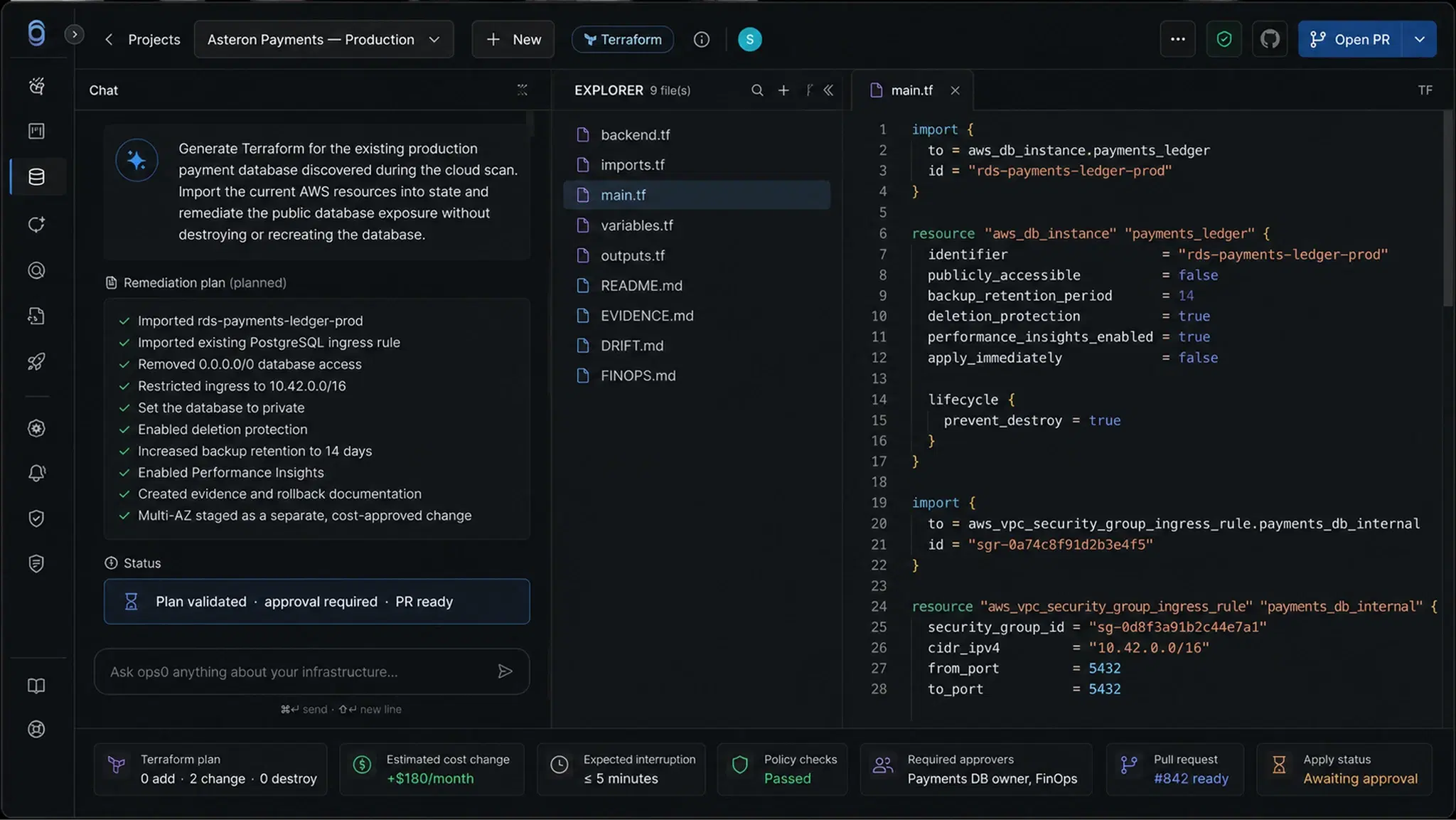
Discover 248 resources, codify the first project into OpenTofu, push the draft to GitHub, and open the review with policy already attached.
IaC adoption should begin with the infrastructure you already have.
ops0 starts by discovering what is running, which means teams do not have to stop everything and design a clean-room Terraform estate before they can start adopting IaC.
- Useful for brownfield infrastructure and undocumented estates
- Discovery-first beats writing code against guesses
- Lets teams adopt gradually instead of demanding a rewrite
Turn existing infrastructure into reviewable code.
Live resources can be codified into Terraform, OpenTofu, or Oxid so the first version reflects what is actually deployed instead of generic templates.
- Codify from discovered state instead of rebuilding manually
- Useful for creating a trustworthy first baseline
- Keeps adoption grounded in the real environment
The new code enters a governed workflow immediately.
Once infrastructure becomes code, the same policy, cost, and approval system used elsewhere in the platform is already waiting for it.
- Policy-aware generation reduces rework early
- Cost estimation and approval start with the first deployable plan
- Useful for teams that want adoption without losing control
Git becomes the review surface, not the place work gets lost.
Generated code can be pushed into GitHub or GitLab with review context attached, so IaC adoption fits the team’s existing review habits without making Git the only system that knows what changed.
- Auto-generated PRs and MRs fit existing code review workflows
- Useful for teams standardizing how infrastructure gets reviewed
- Brings brownfield code into version control without hand-copying
The code stays useful only if reality keeps matching it.
After adoption starts, drift detection and compliance scans make sure the new source of truth does not silently decay the moment someone changes something in the console.
- Drift becomes visible after adoption, not months later
- Useful for keeping the new codebase trustworthy
- Connects adoption to long-term operational discipline
The adoption curve gets shorter because the platform removes the empty starting point.
Teams can move from unmanaged infrastructure to governed code without first pausing to build a perfect IaC program from scratch.
- Useful for platform teams inheriting messy estates
- Reduces manual translation work before real value starts
- Turns adoption into an incremental operating model instead of a separate initiative